Choosing the right paper can make a real difference to how your printable wall art looks when it comes off the printer. The paper affects the finish, the way colours appear, the feel of the print and how well it suits your chosen frame.
The good news is that you don’t need to buy the most expensive paper to get a result you’ll love. The best choice depends on the artwork, your printer, your budget and the look you want to achieve.
1. Matte Paper: A Classic, Understated Finish
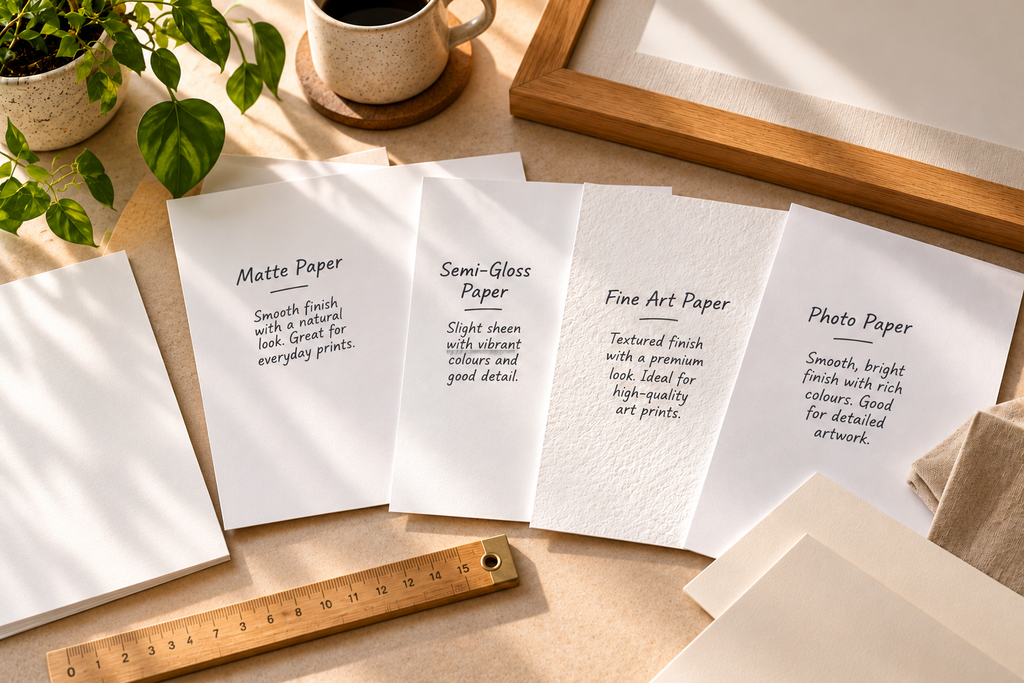
Matte paper has a non-glossy surface that gives prints a soft, understated appearance. It produces little distracting glare, making it a popular option for artwork displayed in living rooms, bedrooms, hallways and other spaces with changing light.
Matte paper can work particularly well with illustrations, graphic designs and artwork where you want the image to remain the focus rather than the shine of the surface.
Best for: A subtle, elegant finish and artwork displayed in rooms where reflections may be distracting.
2. Glossy Paper: Brightness and Shine
Glossy paper has a shiny surface that can make colours appear vivid and give images a polished, photographic look. It can be a good option for artwork with strong colours and detailed imagery.
However, the reflective surface may produce glare under direct light. Fingerprints and reflections can also be more noticeable, depending on the paper.
Best for: Artwork where you want a glossy, photographic finish and where reflections won’t be a problem.
3. Satin or Semi-Gloss Paper: A Middle Ground
Satin and semi-gloss papers offer some sheen without the full shine of glossy paper. They can provide a balance between vivid-looking colour and reduced glare.
The exact finish varies between manufacturers, so check the paper description and, if possible, look at a sample before purchasing a large pack.
Best for: People who want some of the vibrancy of glossy paper without quite as much shine.
4. Fine Art Paper: Texture and Character
Fine art papers are available in a range of finishes, including smooth and textured surfaces. Some have a natural, softly textured appearance that can complement illustrations, painterly designs and artwork intended to look more like a traditional print.
These papers can be more expensive, and the results depend on the paper’s coating, the printer and the ink being used. Not every fine art paper is suitable for every home printer.
Best for: Special prints where paper texture and a premium finish are important.
5. Why Paper Weight Matters
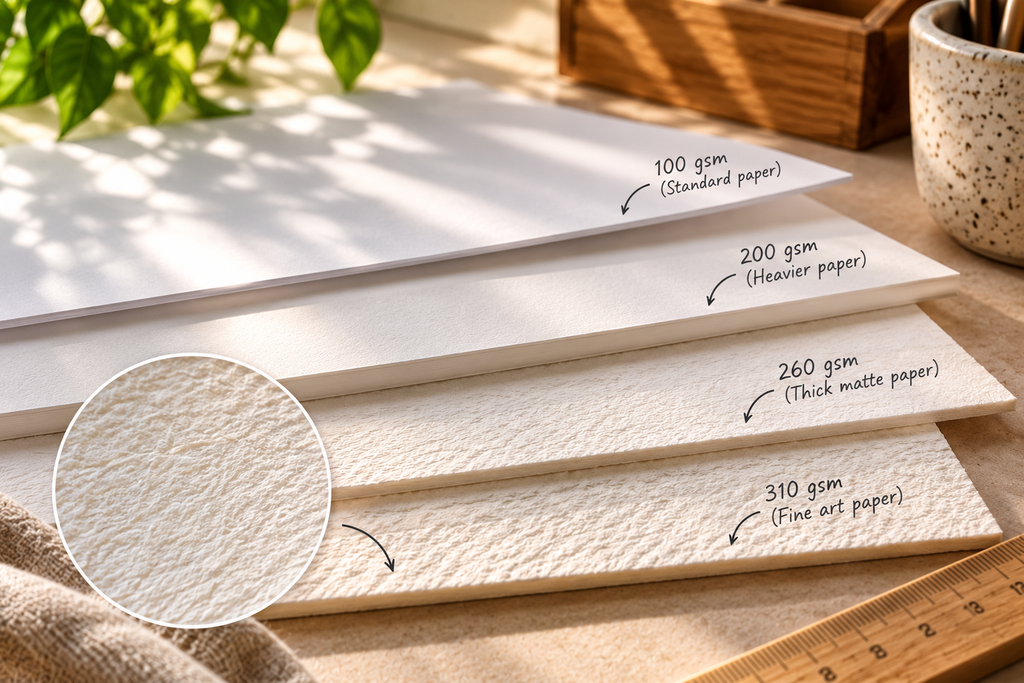
You’ll often see paper weight expressed in grams per square metre, written as gsm. In general, a higher gsm number indicates heavier paper, but weight alone doesn’t tell you everything about the paper’s thickness, stiffness or print quality.
Heavier paper can feel more substantial and may be better suited to certain framed prints. However, you must check your printer’s specifications before using thick media. Some printers cannot feed heavier paper reliably, and others require you to select a specific paper setting.
Don’t assume that the heaviest paper is automatically the best choice. A good-quality paper that your printer handles correctly is more useful than a heavier paper that causes feeding problems.
These figures are illustrative examples rather than universal paper categories. Available paper weights and printer limits vary, so always check your printer manufacturer’s specifications before choosing heavier paper.
6. Choose Paper That Works with Your Printer
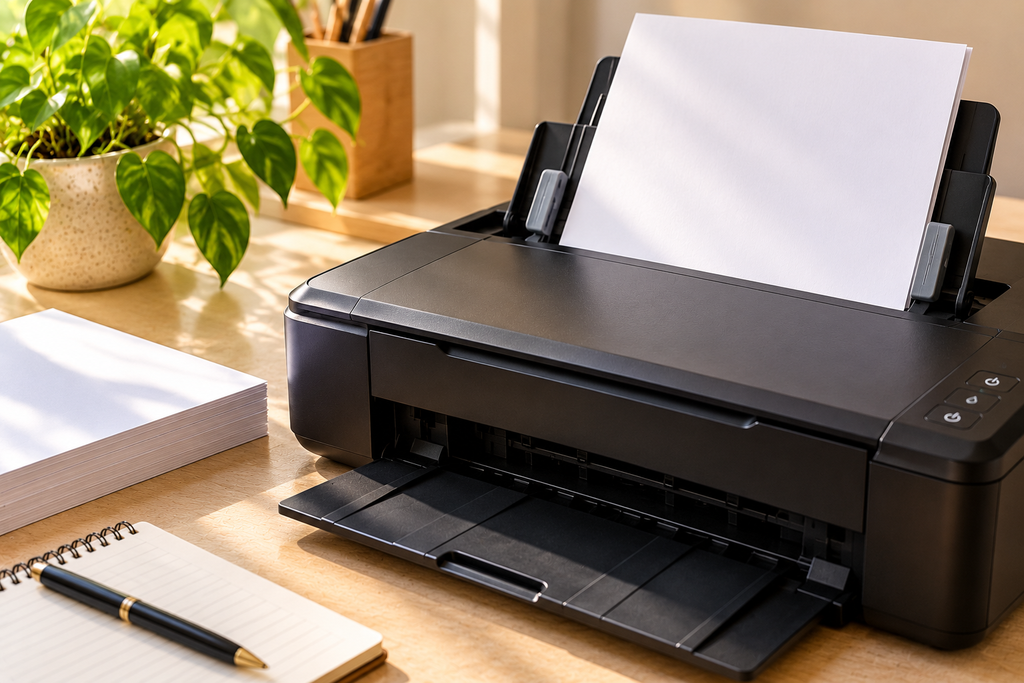
Before buying paper, check whether it is intended for your printer type.
Inkjet and laser printers use different printing technologies, and papers are often designed specifically for one or the other. Using an unsuitable paper may affect how the ink or toner adheres, how quickly the print is ready to handle and the final appearance.
If you’re using an inkjet printer, check that the paper’s coating is suitable for your ink system. If you’re using a laser printer, confirm that the paper is approved for laser printing and can withstand the printer’s operating conditions.
Always check the paper manufacturer’s compatibility guidance as well as your printer manufacturer’s recommendations.
7. Consider the Artwork and the Room
Think about the design before choosing your paper.
- Bold colours and detailed illustrations: A suitable coated matte, satin or glossy paper may work well, depending on the finish you prefer.
- Soft, painterly or traditional-looking artwork: Matte or textured fine art paper may complement the design.
- Artwork in a bright room: A matte or low-sheen finish can help reduce distracting reflections.
- Artwork behind glass: Consider the combined effect of the paper, glazing, lighting and frame. A glossy surface behind glass may create additional reflections.
There isn’t one perfect paper for every design. Your personal preference matters, too.
Before choosing your paper size, check that it suits your artwork’s proportions. Our guide to Why Printable Wall Art Gets Cropped explains how to avoid unwanted cropping.
8. Do a Test Print Before Committing
If you’re uncertain which paper to choose, start with a small test rather than printing your entire collection on an expensive stock.
Use the same printer settings you intend to use for the final print. Check the colour, detail, surface finish and whether the paper feeds correctly. Allow the print to dry or settle as recommended by the paper and ink manufacturer before evaluating it.
If possible, compare two or three suitable papers side by side. Seeing the results in the room where you plan to display the artwork can help you make a more confident choice.
The Best Paper Is the One That Suits Your Print
For many people, good-quality matte paper is a sensible starting point because it offers a clean finish with little glare. Satin, glossy and fine art papers each have their place, however, and the right choice depends on the look you’re trying to achieve.
Before purchasing, check the paper’s compatibility with your printer, consider the artwork and decide how you want the finished print to look. A little preparation can help you avoid wasted paper and produce artwork you’ll be proud to display.
Ready to find artwork for your home? Explore the Miuvia collection and choose printable designs to suit your space and your personal style.